
What is Unschooling? Part 2: What Unschooling Looks Like
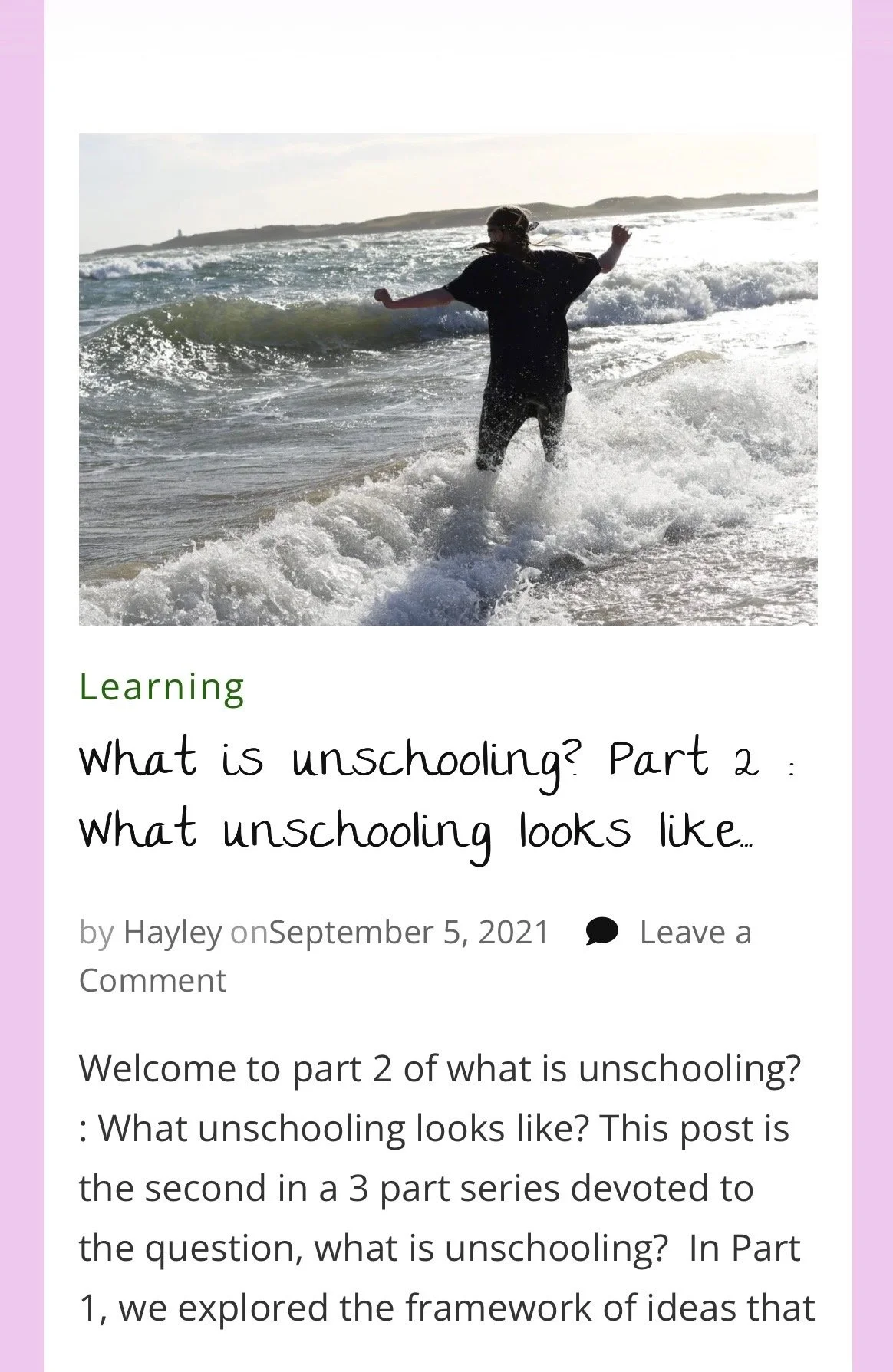
Episode 57: What is Unschooling? Part 2: What Unschooling Looks Like
We welcomed Sue Elvis of Stories of an Unschooling Family to discuss Part Two of Hayley’s What is Unschooling? series.
It was another rich opportunity to dig deeply into the nuts and bolts of the practical side of unschooling, with concrete examples and shared experiences.
We hope you’ll have a listen and learn something new.
Part 1 - Episode 56
Part 3 - Episode 58
We Discuss:
The richness of unschooling being described in the form of a story
That definitions tend to be incomplete and don’t pick up the delight of this way of living
The idea that the very process of parents researching a homeschool method is an unschooling, self-directed way of going about it
That unschooling is the way we learn before school-age and the rest of our life afterward, but it feels more uncomfortable when people imagine that philosophy for school-age kids
That there are both significant differences and key commonalities among unschooling families
That kids are actually often quite capable of long, deep periods of focus when engaged and it’s not in the form of a lesson (thoughts about Charlotte Mason philosophy and short lessons)
How learning happens as a side effect of living
That being focused doesn’t mean being still
Whether, over the years, kids in school are able to gain experience with being fully immersed in something and deeper levels of learning, given the tight structure of a school day
That when we ponder what’s enough, we often assume quantity without remembering the substance within each activity
The role that delight, richness and relationship play
Finding a way to see homeschool record-keeping as an opportunity to look beneath the delight to see what concrete learning pieces are there as well as to help others understand
Grasping magical, spontaneous moments rather than keeping stringently to our plans
Not turning each interest of our child’s into a learning opportunity
Witnessing things together and mutual presence rather than a list of facts learned
The power of a child knowing they can be interested in something without it being turned into an assignment or expectation
Meeting people where they are (including our own self) with doubts, insecurities, questions
Sharing and inviting our children into our interests and observations with lots of joy and no expectation
Whether unschooling is an educational philosophy with education as the end goal (hint: yes and no!)
That there are difficult days ... it’s not always the “every day is your favourite Saturday”assumption that’s often put forward
That not every challenging situation is because of unschooling
Echoes of former ideas that take intention to change
Practical disruptions to our daily rhythm from things like home repairs, weather events, etc
That not only does unschooling not mean lazy parents, it also doesn’t mean lazy kids
How the self-directed projects and goals kids are working on can be genuinely challenging and require high degrees of focus and resilience
The discomfort and challenge for kids of being between projects or activities and at “loose ends” during the transition from one developmental stage to another
Not judging or ranking our children’s interests — there can be a lot of value that isn’t necessarily apparent to us
The perseverance, competence and collaboration that can be involved in gaming
Pooling our skills and talents together because we value what each other has to offer
That nobody lives and learns in isolation; unschooling is not a self-centred life
Conversation as a natural vehicle to critical thinking development
Resources:
What is Unschooling, Part 2: What Does Unschooling Like? Taking a Kinder Path
Unschooling: What’s in a Name? – Ever Learning
Home Ed Labels and Jargon: Sorting Them Through, Episode 19 – Virtual Kitchen Table Podcast
What is Unschooling and How Does it Work? Episode 18 - Virtual Kitchen Table Podcast
What Do Our Unschooling Days Look Like? Part One, Episode 1 - Virtual Kitchen Table Podcast
What Do Our Unschooling Days Look Like? Part One, Episode 2 - Virtual Kitchen Table Podcast
Sandra Dodd's Big Book of Unschooling by Sandra Dodd - Sandra Dodd
Ladies Fixing the World podcast
EU382: Unschooling Stumbling Blocks: It’s Not the Unschooling - Exploring Unschooling Podcast