
Building Resilience Without School
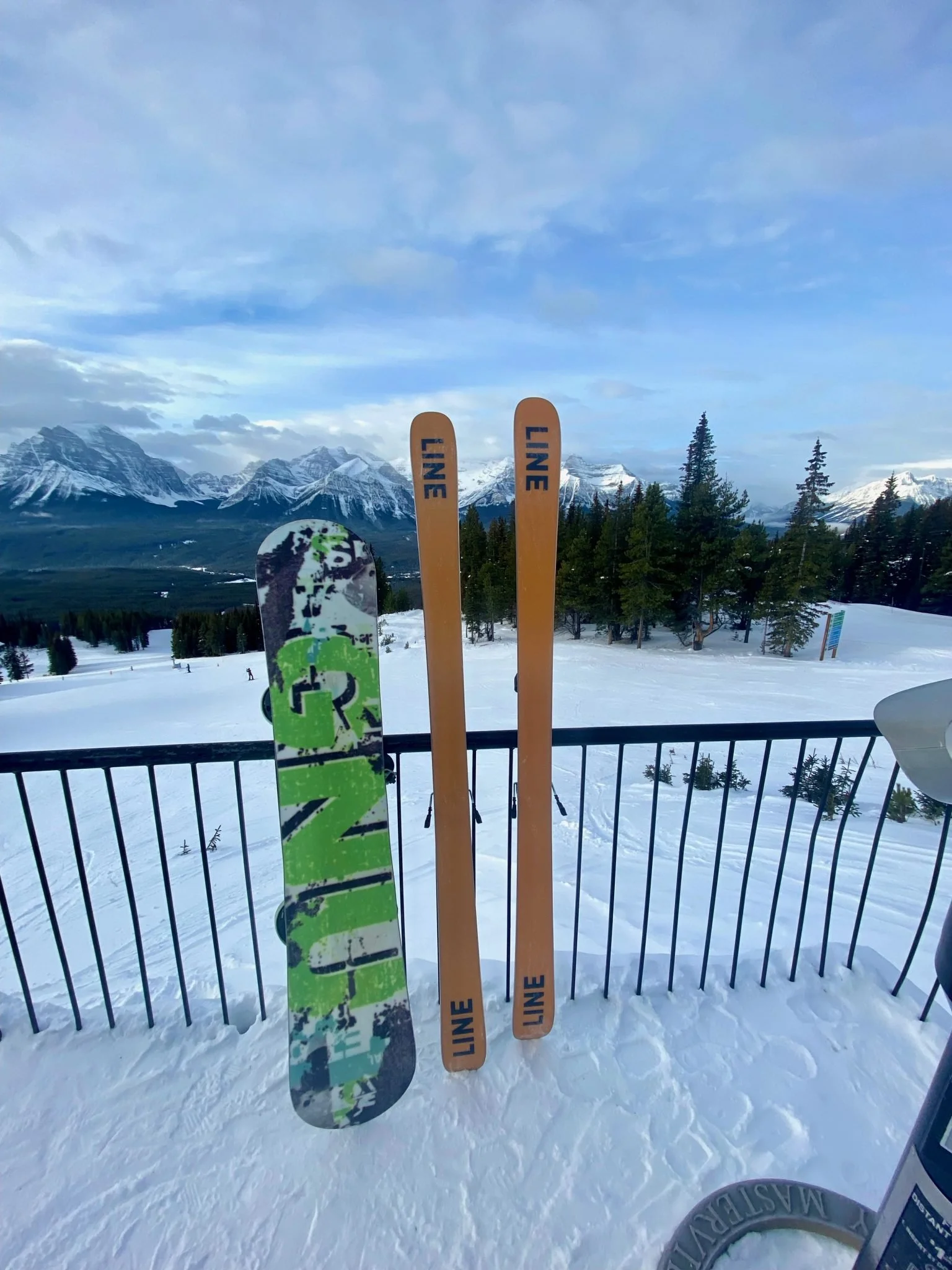
I sat across from my kids at my in-laws’ house, listening to one of my sons (23) fill us in on his last few days of a snowboarding trip to Alberta and BC. I heard him talk about some pieces that weren’t easy, yet he didn’t identify them specifically as such and recounted them in a matter of fact way. They just appeared in the story chronologically.
I was reflecting on it later and noticed them as two separate “not easy” kinds of experiences: Slightly unpleasant/inconvenient and difficult/potentially serious.
In the slightly unpleasant/inconvenient area, things came up naturally. I asked whether he’d slept on the plane since it was an overnight flight and he responded that he hadn’t really felt able to because he’d been in a middle seat. I knew he’d hoped for an aisle or window seat but he was matter of fact that it hadn’t worked out that way.
His luggage, and his friend’s as well, had gotten left at the airport, including his snowboard and equipment, so I saw him calmly tracking it online to see where it was. This was the second trip he’d taken this year where his luggage had gotten left back at another airport. Earlier this winter, he’d gone overseas to Istanbul and his luggage was left in Vienna for a few days. It was frustrating but he understood it can be part of the reality of travelling. These have been the first two flights he’s taken solo, but he seemed relaxed.
On the difficult/potentially serious side, I heard how he and his friend ended up significantly outside of their comfort zone on a steep mountain run and what his thinking process was when he realized his friend had fallen on down below him and, uncharacteristically, was not getting right back up again (spoiler alert – he’s recovering and will be okay). I also heard how, on a fairly isolated run, he managed to find and communicate with other skiers to help get his friend down to the bottom. My son followed behind carrying both his snowboard and friend’s skis as he carefully made his way down the mountain on his backside because he knew he couldn’t snowboard while carrying his friend’s skis.
We asked how his friend was and heard that they had decided to drive to the hospital. My mind shifted to thinking of him driving a rental SUV, finding a hospital in snowy weather in an unfamiliar province and landscape. He didn’t indicate that was a problem though. His friend did, in fact, need to be treated for some injuries and they stayed indoors so he could rest for the remaining days. (He had hurt and scraped up his back quite badly and there were also signs of a bruised kidney).
Of course that loops us back to the disappointment category that they got less than two days’ worth of snowboarding and skiing in when the intention had been 5 and I know my son had saved up for this trip. I didn’t sense any great frustration or resentment other than wanting his friend to continue healing, a bit shoulder-shrugging disappointment and a statement that he’s looking forward to going back to try the resorts they didn’t get to.
I feel it might be useful to say (and my son is fine with me saying) that of my children, he was the one who struggled the most with disappointment, sensory experiences and things going off course. If I opened a granola bar package when he was little and the bar was broken … well, that could affect the way the whole morning went for all of us. How would he manage in the “real world?” one might have wondered. And specifically, how would he manage without having faced the adversity and obstacles that come with school?
Yet I’m glad I didn’t put extra obstacles in his way. I remember being told that it was important for my kids to go to school because there were certain things that were essential to learn such as standing in line, getting along with others and understanding that they couldn’t have their own way all the time.
How would they deal with having to wait? With not getting the seat they wanted?
How would they learn to solve problems and think for themselves?
The idea behind this was that creating obstacles would lead to developing skills and strategies for overcoming them. Without the obstacles, those skills wouldn’t be developed.
And yet, this is not so. It might sound like it would make sense. Logically we hear that practice makes perfect, but the multitude of grown homeschoolers and unschoolers who I know of, both in person and virtually, show me otherwise. Are they perfect? Well, no, of course not. They are at least as capable as anyone else though. They are capable of dealing with the unpleasant/inconvenient kind of obstacles, the ones that people suggest standing in line and having to wait your turn in school will help. They’re also capable of dealing with the more serious kind of obstacles, the ones that some suggest (although much less overtly) will be developed by experiencing bullying and mistreatment – the “I survived so they will too” or “what doesn’t kill you makes you stronger” sort of mentality.
I guess we could talk about the reasons. We could try to figure them out. I suspect it has a lot to do with healthy, secure attachment relationships and close family and community ties that then allow for healthy self-development to flourish. When kids’ emotional needs are met, they are anchored and confident. They don’t need to spend the rest of their lives trying to get them met. They have time and space freed up to make real decisions, take risks, try new things, ones that are in the context of their own life.
Can this happen with kids going to school? Yes. I think it still requires conscious and connected parents though, parents who centre family life.
The finishing of this post is timely. I listened to a podcast today that talked about kids developing grit and resilience. It took a different approach though. It talked about the importance of training our kids to be anti-fragile and to not become entitled – of taking our parenting responsibility seriously. Everything they named was a quality that my children and many other homeschooled children that I know already have. Every single quality! Not expecting special treatment over others, accepting the reality that something has been lost, dealing with disappointment and failure and more.
So how do we get to the point of having children who can manage challenges and who also become adults who manage difficult times without thinking of it as something that needs to be trained?
I think by living real life in connection and communication with them. Acknowledging feelings – our own and theirs – and not pushing away the harder ones. Putting one foot in front of the other with grace as much as we can every day. Finding and celebrating the joy in both the rain and the shine. Working on things together. Because real life has disappointments every single day and downright difficult times sprinkled in as well. There’s no need to create more. We’re not just practicing for some future time. We’re living life right now.
Here is where I think unschooling can often be deeply misunderstood. In its healthiest form, it is neither neglectful parenting nor helicopter parenting, but living life together in connection and respect. In this way, rather than coming up with external training strategies or interventions, we are sharing both trials and times of joy, weathering life together and supporting one another.
It’s hard in the beginning, isn’t it, with people suggesting your children might not be able to cope because of your parenting choices? There is some relief in having children enter the later teen years and adulthood and seeing that yes, they can weather those storms, ones of micro disappointment and larger ones with real potential difficulty. It’s a fine line between describing what I observe and sounding as if I’m boasting about my children, but that’s not my intention. My family is as imperfect as anyone else’s. What I think might be helpful to anyone closer to the beginning of their journey is to illustrate in specific ways how I see this humility, this ability to problem solve, this resilience. I was warned it may not come to pass, yet here it is, in many ways stronger than my own.
So yes, kids will be able to do hard things because they most likely already are doing hard things. They will grow in character and maturity at the pace that unfolds for them. No need for extra practice and pushing. By meeting your children’s needs and also supporting them in meeting their own as they grow and develop, everyday life is enough. 🙂
*Top pictures are at Lake Louise, Alberta. The bottom picture is his flight earlier this winter over the Swiss Alps.